Technology Codersboat Journal
How to Build a SaaS Platform That Grows With Your Business
The way businesses use software has changed significantly. Instead of purchasing software licenses, installing applications on individual computers, and managing infrastructure themselves, businesses can now access powerful software through the internet. This shift has made Software as a Service (S…
The way businesses use software has changed significantly. Instead of purchasing software licenses, installing applications on individual computers, and managing infrastructure themselves, businesses can now access powerful software through the internet. This shift has made Software as a Service (S…
What Is SaaS Development?
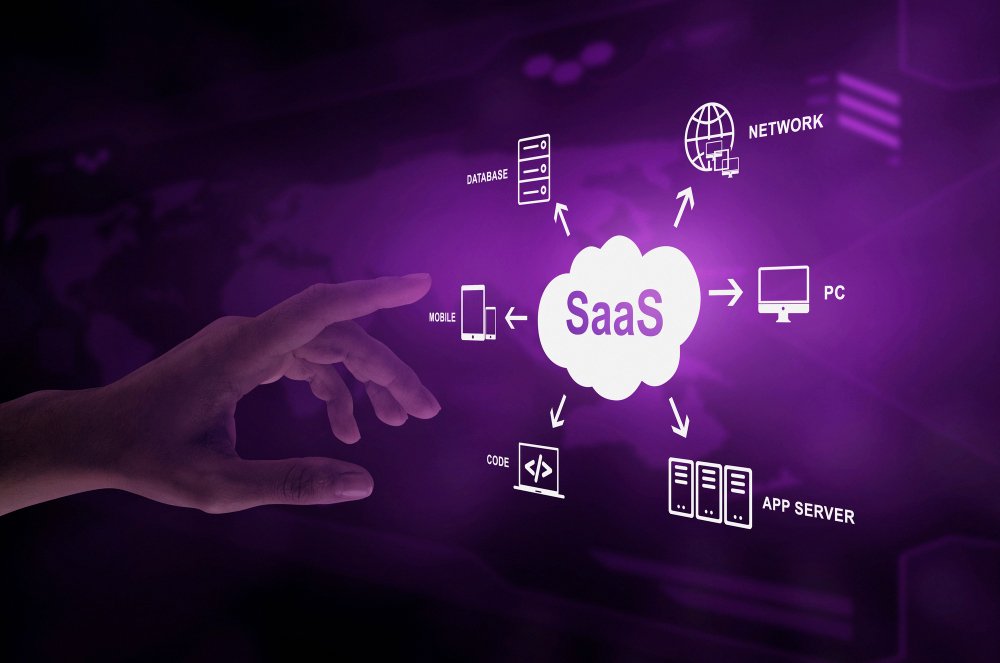
Software as a Service (SaaS) is a software delivery model in which users access an application over the internet, usually through a web browser or mobile application.
The software provider manages the application, infrastructure, updates, and ongoing maintenance. Customers typically pay through monthly or annual subscriptions, although usage-based and other pricing models are also common.
SaaS development involves designing, building, deploying, and maintaining software specifically for this delivery model.
Unlike a traditional website or a one-time software project, a SaaS product is an ongoing service. It must support customer onboarding, account management, permissions, billing, feature updates, and reliable operation over time.
For example, a business might develop a SaaS-based HR management platform that allows multiple companies to manage their employees, attendance, leave requests, and payroll through a single application.
Each company receives its own workspace, user accounts, and authorized access to its business information.
The goal is to create a product that can serve multiple customers efficiently while delivering a consistent and secure experience.
Why Are Businesses Investing in SaaS Products?
SaaS has become an attractive model for businesses that want to deliver digital services, reach more customers, and create recurring revenue opportunities.
1. Recurring Revenue Opportunities
Subscription pricing allows SaaS businesses to generate recurring revenue from customers who continue using the product.
Monthly and annual plans can make revenue more predictable, although actual results depend on customer acquisition, retention, pricing, and operating costs.
2. Easier Access and Collaboration
Users can access cloud-based software from different locations without installing and maintaining separate application copies on every device.
This is particularly useful for distributed teams, growing businesses, and organizations with multiple offices.
3. Centralized Updates and Maintenance
A SaaS provider can deploy updates and improvements centrally, reducing the need for customers to manage software installations individually.
This also allows the product team to improve features based on customer feedback and changing business requirements.
4. Scalable Customer Growth
A well-designed SaaS platform can onboard new customers without requiring an entirely separate product development process for each one.
The underlying infrastructure and architecture must still be planned to handle increasing usage, storage, processing requirements, and operational costs.
5. Flexible Pricing Models
SaaS businesses can offer different plans based on features, user counts, storage, usage, or business requirements.
This makes it possible to serve different customer segments through a shared product while creating clear upgrade paths.
Custom SaaS Development vs. Ready-Made Software
Businesses often need to decide whether to subscribe to an existing software product or develop a custom SaaS platform.
Ready-made software is usually a sensible choice when it already supports the required workflows and can be configured to meet business needs.
Custom SaaS development becomes more attractive when a business has a specialized problem, wants to create its own software product, or needs functionality that existing platforms cannot adequately provide.
Custom development can offer greater control over product functionality, user experience, integrations, and the product roadmap. However, it also introduces responsibility for development, security, hosting, maintenance, and ongoing improvements.
The right decision depends on the business objective, available budget, competitive opportunity, and long-term ownership requirements.
Essential Features of a Successful SaaS Application
The required features depend on the type of product, but most commercial SaaS platforms need several foundational capabilities.
User Registration and Authentication
Users should be able to register, sign in, reset passwords, and securely manage their accounts.
Depending on the product, authentication may also include multi-factor authentication, single sign-on, and identity-provider integrations.
Multi-Tenant Architecture
Many SaaS products serve multiple customers through a shared application. Each customer organization is commonly called a tenant.
A multi-tenant architecture allows customers to use the same product while keeping their data, settings, users, and permissions appropriately separated.
Tenant isolation must be enforced throughout the application, including database queries, APIs, file storage, background jobs, and caching. Authentication alone does not guarantee that one customer cannot access another customer's information.
The right tenancy model depends on the application's security requirements, compliance obligations, and expected scale.
Role-Based Access Control
Different users need different permissions.
For example, a company administrator may manage subscriptions and team members, while an ordinary employee may access only personal records and permitted features.
Role-based access control helps ensure that users can perform only the actions authorized for them.
Subscription and Billing Management
A commercial SaaS platform may need subscription plans, trial periods, invoices, payment processing, renewals, cancellations, and payment-failure handling.
The system should also enforce plan limits and feature entitlements on the server rather than relying only on what the interface displays.
Admin Dashboard and Analytics
An administrative dashboard helps customers manage their accounts, users, settings, usage, and reports.
The SaaS provider may also require a separate internal dashboard to manage tenants, subscriptions, support requests, platform health, and operational metrics.
Notifications and Communication
Email notifications and in-app alerts can help users track important events such as account invitations, subscription renewals, payment failures, and workflow updates.
Notifications should be configurable where appropriate and designed to avoid unnecessary messages.
API Integrations
APIs enable a SaaS platform to connect with payment providers, CRM systems, accounting software, communication services, and other business applications.
A well-planned integration strategy can make the product more useful without requiring every capability to be developed internally.
How to Build a SaaS Application: Step-by-Step
A structured development process can help businesses reduce uncertainty, control scope, and validate the product before investing heavily in additional features.
Step 1: Validate the Product Idea
Start by identifying the problem the product will solve and the customers who experience it.
Research existing alternatives, interview potential users, and understand which features customers consider essential.
A strong SaaS idea addresses a real problem for a clearly defined audience. Building a large feature set before validating demand can increase development costs without improving the chances of success.
Step 2: Define the MVP
A Minimum Viable Product (MVP) is an initial version of the application that contains the core functionality needed to test the product's value with real users.
For example, the MVP of an HR management SaaS might include:
-
Company registration and onboarding.
-
Employee management.
-
Attendance tracking.
-
Leave requests and approvals.
-
Basic reporting.
-
Subscription plans and account administration.
Advanced analytics, AI features, extensive integrations, and other enhancements can be introduced later when they support validated customer needs.
Step 3: Plan the Architecture and Technology Stack
The technology stack should reflect the product's complexity, expected usage, team expertise, security requirements, and maintenance needs.
A web-based SaaS platform might use Laravel or another backend framework, Angular or React for the frontend, a relational database such as MySQL or PostgreSQL, and cloud infrastructure for deployment.
The architecture should account for authentication, authorization, tenant isolation, background jobs, file storage, monitoring, and reliable deployment practices.
Not every SaaS product needs microservices from day one. A well-structured monolithic application can be an effective starting point, with service separation introduced when there is a clear operational or architectural reason.
Step 4: Design the User Experience
A SaaS product should make it easy for customers to understand the interface and complete their tasks.
Create user flows, wireframes, and prototypes before implementing complex screens. Pay particular attention to onboarding, dashboards, navigation, account settings, and mobile responsiveness.
A clear user experience can reduce support requests and help customers discover the product's value more quickly.
Step 5: Develop Core Features
Build the application in manageable stages, prioritizing the workflows required for the MVP.
This may include backend APIs, frontend components, database models, administrative interfaces, notifications, and third-party integrations.
Code reviews, automated tests, consistent error handling, and version control help maintain software quality as the product evolves.
Step 6: Implement Security and Tenant Isolation
Security must be included in the architecture rather than added only before launch.
Implement server-side permission checks, tenant-aware data access, secure session or token management, input validation, appropriate encryption, and protected file storage.
Test whether users can access records belonging to other tenants by manipulating URLs, request parameters, API identifiers, or background task inputs.
Also establish backup procedures, monitoring, and a process for addressing vulnerabilities.
Step 7: Configure Subscriptions and Payments
If the product uses paid subscriptions, integrate an appropriate payment provider and implement the subscription lifecycle.
Consider free trials, plan upgrades, downgrades, failed payments, cancellations, refunds, and subscription expiration.
Maintain a reliable record of subscription status and use verified payment events, such as validated webhooks, to update entitlements.
Step 8: Test and Launch
Before launch, test the main workflows, authorization rules, payment scenarios, tenant separation, performance, and recovery procedures.
Verify that production configuration, logging, backups, monitoring, and error reporting are in place.
A controlled rollout with a small group of initial customers can help identify problems before a broader launch.
Step 9: Monitor and Improve
A SaaS product continues evolving after launch.
Collect customer feedback, monitor application performance, measure feature adoption, and investigate support issues.
Use these insights to prioritize product improvements, optimize infrastructure costs, and introduce additional capabilities based on actual demand.
Choosing the Right SaaS Architecture
Architecture influences product security, operational complexity, performance, and long-term cost.
Single-Tenant Architecture
In a single-tenant approach, each customer has a dedicated application environment or deployment.
This can provide stronger separation or support specific customization requirements, but managing separate deployments may increase infrastructure and operational overhead.
Multi-Tenant Architecture
In a multi-tenant approach, multiple customers use a shared application environment while the system enforces separation between their data and resources.
This can simplify centralized updates and make efficient use of shared infrastructure.
However, tenant isolation, authorization, usage limits, and noisy-neighbor effects must be handled carefully.
Shared Database vs. Separate Databases
A shared database can be cost-effective for an early-stage SaaS product, provided tenant ownership is enforced consistently.
Separate databases or other stronger isolation approaches may be more appropriate when customers require additional separation, dedicated environments, or particular compliance controls.
There is no single architecture that fits every SaaS business. The best design balances security, customer expectations, operational complexity, and growth plans.
SaaS Security: What Should Businesses Consider?
Customers trust SaaS providers with their business information. Security failures can damage that trust and interrupt critical operations.
A security-conscious SaaS application should consider:
-
Secure authentication and appropriate account recovery.
-
Role-based permissions and tenant-level access controls.
-
Encryption in transit and suitable protection for stored data.
-
Rate limiting and protection against common web application attacks.
-
Secure API authorization and input validation.
-
Backup, restoration, and disaster recovery procedures.
-
Audit logs for sensitive actions.
-
Monitoring, vulnerability management, and dependency updates.
-
Data retention, deletion, and privacy requirements.
Multi-tenant products need particular attention because shared infrastructure can create cross-customer exposure if isolation controls fail. Security testing should cover all tenant-owned data and resources, not just the primary database.
How Much Does It Cost to Build a SaaS Application?
The cost of developing a SaaS product depends on the scope, complexity, integrations, security requirements, team structure, and expected scale.
A simple MVP with a limited number of workflows will generally require less investment than a mature enterprise platform with complex permissions, multiple integrations, advanced reporting, and strict compliance requirements.
Major cost factors include:
-
Product discovery and UI/UX design.
-
Frontend and backend development.
-
Database and multi-tenant architecture.
-
Authentication and access control.
-
Subscription and payment integration.
-
Testing, deployment, and security reviews.
-
Hosting, monitoring, support, and maintenance.
Businesses should also budget for recurring expenses after launch. These may include cloud hosting, email delivery, third-party APIs, payment processing fees, technical support, and continued development.
Instead of estimating cost from a feature list alone, define the MVP, identify essential integrations, and establish clear acceptance criteria before requesting a development proposal.
Common SaaS Development Mistakes to Avoid
Building Too Many Features Too Early
Trying to develop every requested feature before launch can delay validation and increase costs.
Start with the core customer problem and expand the product using real usage data and feedback.
Ignoring Tenant Isolation
A SaaS application must prevent customers from accessing one another's data, including through APIs, exports, search, cached responses, and background jobs.
Treat tenant isolation as a fundamental security requirement.
Overengineering the Architecture
Complex infrastructure does not automatically make a product scalable.
Choose an architecture the team can build, test, deploy, and maintain effectively, and introduce additional complexity when justified by actual needs.
Neglecting Subscription Lifecycle Management
Payment processing is only one part of subscription management. The application must also handle renewals, failed payments, plan changes, cancellations, and entitlement updates consistently.
Failing to Monitor Customer Behavior
Without analytics and customer feedback, it becomes difficult to understand which features deliver value or why customers stop using the product.
Track relevant product metrics and use them to guide improvements.
How to Measure SaaS Product Performance
Once the product is live, business and product metrics can help determine whether it is growing sustainably.
Important metrics include:
-
Monthly recurring revenue (MRR): Recurring subscription revenue normalized to a monthly basis.
-
Customer churn rate: The proportion of customers who leave during a defined period.
-
Customer acquisition cost (CAC): The cost of acquiring a customer.
-
Customer lifetime value (LTV): An estimate of the revenue or gross profit associated with a customer over their relationship with the business.
-
Activation rate: The proportion of new users who reach a defined meaningful milestone.
-
Retention rate: The proportion of customers who continue using the product over time.
-
Infrastructure cost per tenant: An estimate of the operational cost associated with serving each customer.
These metrics should be interpreted together. Growing revenue alone does not guarantee a healthy SaaS business if acquisition costs, churn, support requirements, or infrastructure expenses are also increasing.
Why Choose CodersBoat for SaaS Development?
Turning an idea into a successful SaaS product requires a combination of product planning, software engineering, thoughtful architecture, and ongoing technical support.
At CodersBoat, we focus on developing digital solutions around business requirements, user needs, and long-term product goals.
Our software development capabilities can support businesses that want to create custom web applications, build subscription-based platforms, integrate third-party services, or modernize existing systems.
Our approach emphasizes:
-
Requirement analysis: Understanding the problem, target audience, and product objectives.
-
Custom development: Building functionality around specific business workflows.
-
Scalable architecture: Planning for maintainability, security, and future expansion.
-
API integration: Connecting the platform with relevant business services.
-
Quality assurance: Testing core functionality, permissions, and critical user journeys.
-
Ongoing support: Helping maintain and improve the product after launch.
Whether you are validating a new software idea or planning a more sophisticated business platform, a clearly defined development roadmap can help you prioritize investment and reduce unnecessary complexity.
Conclusion
SaaS development provides businesses with an opportunity to transform software ideas into accessible digital products that can evolve alongside customer needs.
Building a successful SaaS application requires more than writing code. It involves validating the product idea, choosing an appropriate architecture, developing essential features, implementing security, managing subscriptions, and continuously improving the user experience.
By starting with a focused MVP and building on a reliable technical foundation, businesses can validate demand before expanding their product.
At CodersBoat, we believe the strongest software products begin with a clear business problem and a practical development strategy.
Planning to build your own SaaS product? Visit CodersBoat.com to discuss your idea and explore a development approach tailored to your business goals.
Thoughtful strategy makes room for lasting growth.
Talk to our team